
WOSU 89.7 NPR News | By George Shillcock
Published October 14, 2024 at 4:12 PM EDT
John Minchillo
/
Associated Press
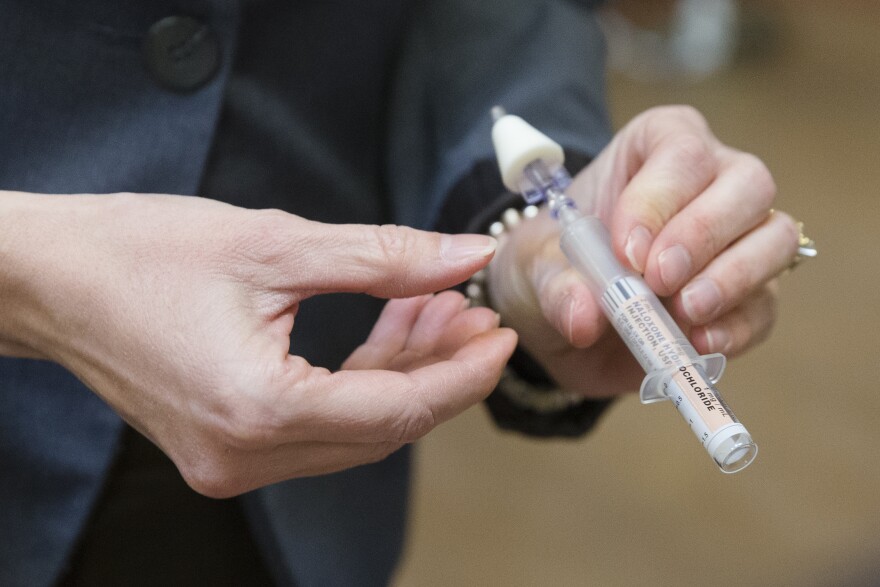
An Ohio State University study found bystanders are using naloxone in higher quantities to help save people from overdosing on opioids.
The study looked at national use of naloxone by people without medical training to treat an opioid drug overdose. The drug helps reverse the impacts of an overdose to prevent deaths.
The study found the drug is being administered more by bystanders, but the vast majority of naloxone is being given by professionals when someone is overdosing.
“Naloxone is a lifesaving medication that can reverse opioid overdose effects when given immediately,” said Ashish R. Panchal, an Ohio State professor and the study’s senior author. “Similar to CPR, stepping up to help before emergency crews arrive can be the difference between life and death.”
The study said more than 744,000 patients had a dose of naloxone between 2020 and 2022. Almost 25,000 of them received naloxone from an untrained bystander.
That’s a 43% increase. However, the study found that it still only makes up less than 4% of the total administered naloxone doses. That is according to data from two years from the National Emergency Medical Services Information System, the national emergency medical services patient care record database.
This is despite a large increase in public awareness campaigns and improved access to naloxone.
Last year, the Food and Drug Administration approved naloxone for over-the-counter use. Forty-six states and the District of Columbia provide legal immunity for bystanders who help people experiencing an opioid overdose.
PhD student Chris Gage said the study shows more work needs to be done.
Click here for the full article.
 Kids of Overdose Podcast
Leave a comment